Budtenders Association (BTA) – Learn & Earn™ | Market Intelligence | Brand Health Insights
Welcome to Budtenders Association
This website contains cannabis-related content intended for adults. To continue, please confirm that you are of legal age to access cannabis content in your province, territory, or country.
We connect Budtenders, consumers, and brands to help shape the future cannabis.Become a Member
For many Canadians, cannabis is still viewed primarily as a retail product or a social issue. Yet according to industry leaders, the legal cannabis sector has quietly become one of the country’s most significant economic contributors.
Speaking at the Economic Club of Canada’s event Canada’s Next Global Advantage: Unlocking the Economic Power of Cannabis, Organigram CEO James Yamanaka highlighted just how large the industry has become.
“The legal cannabis industry now employs probably close to a quarter of a million people,” Yamanaka said. He added that the sector contributes “about $16 billion” to the Canadian economy, including roughly “$8 billion” in direct GDP.
Those numbers place cannabis among Canada’s major industries.
To put this into perspective, moderator and Globe and Mail reporter Jameson Berkow noted that Canada’s oil sands and heavy oil sectors—often viewed as pillars of the Canadian economy—support approximately 200,000 direct and indirect jobs. The cannabis industry, by comparison, supports nearly 250,000 jobs across cultivation, processing, retail, logistics, research, compliance, marketing, and countless other roles. Yet despite its economic footprint, cannabis rarely receives the same recognition.
Yamanaka challenged this perception directly, asking, “What industry does Canada have where it is the world leader… the biggest exporter?” His point was simple: cannabis is no longer a niche market. It is one of the few industries where Canada can legitimately claim global leadership.
For budtenders, this matters. Every day, budtenders help consumers navigate products, understand cannabinoids, and make informed purchasing decisions. While the role is sometimes underestimated by those outside the industry, these economic figures demonstrate that budtenders are part of a sector that generates billions of dollars in economic activity and supports hundreds of thousands of Canadian jobs.
The numbers also matter for cannabis advocacy organizations. Public conversations about cannabis often focus on consumption, public health, or legalization policy. Those issues remain important, but economic impact is becoming an increasingly powerful part of the conversation.
When policymakers understand that cannabis supports nearly a quarter of a million Canadian jobs, contributes billions to GDP, and generates export revenue around the world, the industry becomes harder to dismiss as a fringe issue. It becomes an economic development story.
This shift in framing may be one of the industry’s greatest opportunities. Rather than focusing solely on cannabis as a regulated product, advocates can point to its role as a source of employment, innovation, tax revenue, and international trade.
As Yamanaka suggested, the future of cannabis advocacy may depend on helping Canadians recognize what the industry has already become: a major employer, a global exporter, and an important contributor to Canada’s economy.
Cannabis is one of Canada’s fastest-growing economic success stories.
For generations, potatoes have been one of Canada’s most iconic agricultural crops. They have shaped rural economies, supported farming communities, and become synonymous with agricultural production in provinces like New Brunswick and Prince Edward Island.
But according to Organigram CEO James Yamanaka, there is a new crop making an even larger economic impact in parts of Atlantic Canada.
Speaking at the Economic Club of Canada’s event Canada’s Next Global Advantage: Unlocking the Economic Power of Cannabis, Yamanaka noted that in New Brunswick, cannabis now generates more agricultural cash receipts than potatoes.
It’s a remarkable statistic. Less than a decade ago, cannabis was an illicit crop. Today, it has become one of the most valuable agricultural products in parts of Canada. The transformation reflects how quickly the legal cannabis industry has grown since legalization.
Across the country, the legal cannabis sector now supports nearly 250,000 jobs and contributes approximately $16 billion to the Canadian economy. Cultivation facilities, processing plants, laboratories, logistics networks, retailers, and ancillary businesses have created thousands of employment opportunities in communities large and small.
For many Canadians, cannabis is still viewed primarily through the lens of legalization or retail sales. Yet increasingly, cannabis is becoming an agricultural and economic story.
Like other high-value crops, cannabis requires skilled growers, sophisticated production facilities, research and development, quality assurance programs, and export infrastructure. Unlike many traditional crops, however, cannabis has also positioned Canada as a global leader in a rapidly growing international market.
The comparison to potatoes is more than just a surprising headline. It highlights how cannabis has evolved into a legitimate agricultural commodity capable of generating significant economic activity.
For budtenders, this perspective is important. Every product on a dispensary shelf represents the work of cultivators, processors, researchers, quality assurance teams, transportation providers, and countless other professionals. Retail is only one part of a much larger industry ecosystem.
For consumers, the statistic offers a glimpse into how deeply cannabis has become integrated into Canada’s economy. What was once a prohibited crop is now helping support jobs, generate tax revenue, drive exports, and strengthen regional economies.
The cannabis industry may benefit from being viewed less as a policy issue and more as an economic success story. And few statistics illustrate that transformation better than this one: in parts of Canada, cannabis has become bigger than potatoes.
For years, cannabis tourism was easy to explain. You went to Amsterdam. Or Jamaica. Today, things are way more exciting. Legalization, decriminalization, social clubs, and cannabis-friendly experiences have expanded travel destinations for stoners. A cannabis vacation can include exploring immersive art installations in Denver, joining a social club in Barcelona, or touring a pot farm in Jamaica.
The challenge isn’t finding somewhere cannabis-friendly anymore. It’s deciding what kind of cannabis traveler you want to be. Are you travelling for cannabis culture? History? Outdoor adventure? Luxury experiences? Beach vibes? Art? Music?
Fortunately, there’s a destination for all of the above.
Denver, Colorado
Stoner Surrealism and Art
One of the most culturally significant unique attractions in Denver is the International Church of Cannabis. Originally a church built in 1902, it was transformed into into a psychedelic light and art experience after legalization. Massive murals explode across the walls and ceiling while immersive light shows turn the sanctuary into something between an art gallery and an alternate dimension. Less religious institution, more sensory architecture experiment.
A few miles away sits Meow Wolf’s Convergence Station, arguably one of the most cannabis-compatible attractions on the planet. Visitors can spend hours navigating hidden passages, strange alien worlds, and bizarre storylines that make perfect sense right up until they don’t. You will regret not visiting Meow Wolf for the rest of your life if you skip it. 100% life changing immersive experience.
Denver also offers cannabis-friendly comedy nights, painting classes, educational cultivation tours, and an increasing number of social consumption spaces. When you’re finished exploring the city, Red Rocks Amphitheatre is less than an hour away. Seeing a concert surrounded by towering red sandstone formations is a bucket-list experience.
Cannabis Laws: Adult-use cannabis is legal in Colorado for 21+, with regulated dispensaries throughout Denver, though public consumption remains prohibited.
Don’t Miss: 📍 International Church of Cannabis 📍 Meow Wolf Convergence Station 📍 Red Rocks Amphitheatre (off-site consumption only) 📍 Cannabis cultivation tours 📍 Cannabis-friendly events and lounges 📍 Private 420-friendly events
Barcelona, Spain
The Social Club Capital
Barcelona’s cannabis scene operates by entirely different rules. There are no flashy dispensaries. No giant cannabis stores. No neon signs. Instead, cannabis culture lives behind unmarked doors. Cannabis social clubs emerged from Spain’s unique legal framework after court rulings interpreted private cultivation and consumption as non-criminal when conducted within closed groups. Rather than functioning as retail stores, these clubs operate as private associations where members can gather, socialize, and consume cannabis.
The result is a system that is neither commercial like North America nor fully prohibited like much of Europe. Some clubs are simple and low-key. Others host art exhibitions, live music, educational events, and social gatherings.
Outside the clubs, Barcelona remains one of Europe’s most captivating summer destinations. Antoni Gaudí’s surreal architecture seems almost designed to bend reality. The winding streets of the Gothic Quarter invite endless wandering. Barceloneta Beach provides relief from the summer heat, while tapas bars keep the city buzzing long after midnight.
Cannabis Laws: Public consumption is illegal. Private consumption is generally tolerated. Cannabis social clubs operate through membership systems, but they are not retail dispensaries and are tightly regulated at the municipal level. Public consumption can result in fines.
Don’t Miss: 📍Cannabis social clubs 📍Park Güell 📍Sagrada Família 📍Gothic Quarter 📍Barceloneta Beach
Amsterdam, Netherlands
The Original Cannabis Pilgrimage
While many destinations now offer legal cannabis, none can replicate the history of Amsterdam. Long before legalization became politically acceptable, Amsterdam’s coffeeshop culture created a space where cannabis consumers could gather openly. The city’s reputation became so intertwined with cannabis that many travellers still assume it is the world’s cannabis capital.
What surprises first-time visitors is how much more Amsterdam offers beyond coffeeshops. The city is built for slow exploration. Canal cruises drift past centuries-old buildings. Bicycles outnumber cars. Parks fill with locals enjoying the short Dutch summer. Every corner seems to contain another café, gallery, or hidden courtyard.
For cannabis enthusiasts, the city’s greatest attraction may actually be its history. Amsterdam isn’t simply cannabis-friendly. It helped normalize cannabis culture for generations of travellers. What matters is not the legal nuance, but the cultural precedent: Amsterdam proved cannabis could exist in open, regulated hospitality environments without collapsing public order.
Cannabis Laws: The Netherlands never fully legalized cannabis. Instead, it developed a tolerance policy that allows licensed coffeeshops to sell small quantities Cannabis remains technically illegal but is tolerated under Dutch policy (“gedoogbeleid”) through these licensed coffeeshops under strict limits. Cultivation, production, and supply chains remain illegal, creating a regulated-but-contradictory system.
Don’t Miss: 📍 Historic “coffeeshops” 📍 Cannabis museum and counterculture history 📍 Canal cruises with cannabis-friendly etiquette (private use rules apply) 📍 Vondelpark 📍 Jordaan neighbourhood
Jamaica
Beyond the Stereotypes
No destination suffers from more cannabis clichés than Jamaica. Images of reggae music, beach chairs, and oversized spliffs have become so common that they often overshadow the island’s actual cannabis culture.
Jamaica offers one of the most culturally rooted cannabis experiences in the world. Cannabis in Jamaica is deeply connected to Rastafarian spirituality, cultural identity, and historical resistance. For travellers interested in learning rather than simply consuming, Jamaica offers one of the most meaningful cannabis experiences available.
Cannabis here (traditionally known as “ganja”) is deeply tied to Rastafarian spiritual practice and historical resistance movements. Visitors can tour cannabis farms, visit herb houses, meet local cultivators, and learn about the plant’s role within Jamaican society.
Of course, there are also magnificent beaches. Whether you’re exploring Negril’s famous Seven Mile Beach or chasing waterfalls near Ocho Rios, Jamaica effortlessly combines cultural education with tropical vacation energy.
Cannabis Laws: Decriminalization in 2015 reduced penalties for small possession and created a framework for medical and religious use, though full legalization has not occurred.
Don’t Miss: 📍 Cannabis farm tours in rural parishes 📍 Herb houses 📍 Rastafarian cultural experiences 📍 Seven Mile Beach 📍 Dunn’s River Falls 📍 Cultural education around ganja and spirituality
Vancouver, Canada
Cannabis Meets the Great Outdoors
Some destinations build attractions around cannabis. Vancouver doesn’t need to. The city’s greatest asset is its setting, at the base of a mountain surrounded by ocean, forests, and islands.
Cannabis has been legal across Canada since 2018, and Vancouver’s cannabis scene has matured into something refreshingly normal. Dispensaries aren’t tourist attractions. They’re simply part of the landscape. That freedom allows visitors to focus on the city itself.
Spend the morning cycling around Stanley Park. Grab lunch at Granville Island. Kayak through False Creek. Watch the sunset over English Bay. Take a day trip to Vancouver Island. Take a trip to all the islands! The cannabis is there when you want it.
Cannabis Laws: Cannabis is legal nationwide for adults, though public consumption regulations vary. There are very strict no smoking laws in public places including Granville Island.
Don’t Miss: 📍 Stanley Park 📍 Granville Island 📍 English Bay 📍 North Shore hiking trails 📍 Vancouver Island
Montevideo, Uruguay
A Cannabis History Lesson
Uruguay rarely appears on mainstream travel lists, which is precisely why it deserves attention. In 2013, the country became the first nation in the world to legalize cannabis. While Canada’s market eventually became larger and American legalization attracted more headlines, Uruguay changed the conversation first.
Its system wasn’t designed around tourism or corporate profits. Instead, legalization was approached as a public policy experiment intended to undermine illicit markets and improve public health outcomes. For cannabis enthusiasts, visiting Uruguay is like visiting a historical landmark. You’re seeing the place that proved nationwide legalization was possible.
The capital city of Montevideo adds beaches, historic architecture, wine regions, and a relaxed atmosphere that feels worlds away from the pace of larger tourist destinations.
Cannabis Laws: Legal nationwide, but access is structured primarily for citizens and registered residents. Tourism access is extremely limited.
Don’t Miss: 📍 Cannabis policy history 📍 Ciudad Vieja 📍 Rambla waterfront walking culture 📍 Montevideo cultural and coastal exploration
Berlin, Germany
Europe’s New Cannabis Frontier
Germany’s recent cannabis reforms have made Berlin one of the most closely watched cannabis destinations in Europe. The city already possessed a strong counterculture identity, legendary nightlife, and a long history of alternative communities. Cannabis reform simply added another layer.
Berlin’s appeal lies in its unpredictability. One moment you’re exploring remnants of the Berlin Wall. The next you’re wandering through a street art-covered neighbourhood or dancing until sunrise in a converted industrial building. As Germany continues navigating its evolving cannabis landscape, Berlin is positioned to become one of Europe’s most important cannabis destinations.
Cannabis Laws: Germany allows personal possession and limited cultivation under federal rules, with cannabis clubs operating under regulatory frameworks. Commercial retail is still restricted.
Don’t Miss: 📍 East Side Gallery 📍 Kreuzberg 📍 Museum Island 📍 Berlin nightlife
Bangkok, Thailand
Cannabis Tourism’s Wild Card
No destination has experienced a cannabis transformation quite like Thailand. Within a remarkably short period, dispensaries appeared throughout Bangkok, cannabis cafés emerged, and the country became one of the most talked-about destinations in global cannabis tourism.
At the same time, Thailand’s regulations have continued evolving, creating an environment where travellers should pay close attention to current laws before visiting. Even without cannabis, Bangkok is sensory overload in the best possible way. Night markets, floating markets, temples, rooftop bars, and street food create an experience unlike anywhere else.
Cannabis Laws: Regulations continue to evolve. Travelers should verify current rules before departure.
Don’t Miss: 📍 Cannabis cafés 📍 Night markets 📍 Temple tours 📍 Rooftop dining 📍 Chao Phraya River cruises
Portland, Oregon
Where Craft Cannabis Thrives
If California helped build the cannabis industry, Oregon perfected the craft side of it. Portland has long embraced independent businesses, local makers, and a fiercely DIY culture. The city’s cannabis scene reflects that same mindset. Here, cannabis isn’t treated as a luxury product or a tourist attraction. It’s approached more like craft beer, specialty coffee, or small-batch wine, as something to be discussed, compared, and appreciated.
Oregon is known for producing exceptional flower, and many cannabis enthusiasts consider the state one of North America’s premier destinations for terpene-rich cultivars and small-scale cultivation. Step into a Portland dispensary and you’re likely to find knowledgeable staff eager to discuss genetics, growing techniques, and flavour profiles.
Outside the dispensaries, Portland offers plenty of ways to spend a summer day. Forest Park contains more than 80 kilometres of trails within city limits, making it one of the largest urban forests in North America. Food trucks serve everything from Korean fried chicken to handmade dumplings, while local breweries, bookstores, and quirky neighbourhoods reward wandering without a plan.
A short drive outside the city opens up even more possibilities. The Columbia River Gorge offers waterfalls, hiking trails, and breathtaking viewpoints, while the Oregon coast delivers rugged beaches and dramatic ocean scenery that feel a world away from urban life.
Unlike destinations that have built tourism attractions around cannabis, Portland’s appeal comes from how naturally cannabis fits into the city’s culture. It’s less about spectacle and more about appreciation, making it a destination for travellers who enjoy learning about what they’re consuming and the people who produce it.
Cannabis Laws: Adult-use cannabis is legal for adults 21 and older. Purchases can be made through licensed dispensaries, though public consumption remains prohibited.
Don’t Miss: 📍 Boutique dispensaries featuring Oregon-grown flower 📍 Food cart pods 📍 Powell’s City of Books 📍 Tillamook Cheese 📍 Oregon Coast day trips
Today, cannabis travel is wildly diverse. Some places offer fully legal retail markets. Others operate through private clubs, pilot programs, or decriminalized frameworks. A few still sit in legal grey zones where culture has outpaced legislation.
The question isn’t where can I go? It’s what kind of cannabis culture do I want to experience?
If you’ve spent any time browsing dispensary menus lately, you’ve probably seen products described as THC diamonds, diamond-infused pre-rolls, or diamonds and sauce. The name sounds more like something you’d find in a jewellery store than a cannabis shop, but diamonds have quickly become one of the most popular and potent cannabis products on the market. So what exactly are THC diamonds, and why are they showing up in everything from concentrates to pre-rolls?
What Are THC Diamonds?
Despite the name, cannabis diamonds aren’t actually made of THC. They are made of THCA (tetrahydrocannabinolic acid), the natural compound found in raw cannabis plants that eventually becomes THC.
THCA itself does not produce the intoxicating effects associated with cannabis. However, when heat is applied through smoking, vaping, or dabbing, THCA converts into THC through a process called decarboxylation.
Think of THCA as the inactive version of THC. Once heated, it transforms into the cannabinoid responsible for the euphoric and intoxicating effects that consumers experience. THCA diamonds are called “diamonds” because they form into crystal-like structures that can look remarkably similar to tiny gemstones.
Why Are Diamonds So Potent?
What makes diamonds unique is their purity. Most cannabis flower contains between 15% and 30% THC. By comparison, THCA diamonds often test between 97% and 99% THCA, making them one of the most concentrated cannabis products available.
Because they contain almost pure cannabinoid content, even a very small amount can have a significant effect once heated and converted into THC.
How Are THC Diamonds Made?
Diamonds start with cannabis flower, specifically the sticky resin glands called trichomes that contain cannabinoids and terpenes. Most producers begin with fresh-frozen cannabis, meaning the plant is harvested and immediately frozen to preserve its cannabinoid and terpene profile.
Using specialized extraction equipment, cannabinoids and terpenes are separated from the plant material. Over time, under carefully controlled conditions, the THCA naturally begins to crystallize and form solid structures. These crystals become the diamonds. The liquid portion left behind is rich in terpenes and is commonly called sauce. When sold together, the product is often labelled as diamonds and sauce.
What Are “Diamonds and Sauce”?
If you’ve ever opened a jar of diamonds and sauce, you’ll notice two distinct components:
The diamonds are the solid THCA crystals. The sauce is a terpene-rich liquid containing flavour and aroma compounds.
This combination gives consumers the best of both worlds: Extremely high potency from the diamonds. Rich flavour and aroma from the terpene sauce.
On their own, diamonds have very little flavour or smell. The sauce is what provides the strain-specific aromas consumers often associate with premium cannabis products.
How Are THC Diamonds Consumed?
There are several ways consumers use diamonds.
Dabbing Dabbing remains one of the most common methods. A small piece of diamond is placed on a heated surface and vaporized for inhalation. Because diamonds are so potent, most consumers only need a tiny amount.
Concentrate Vaporizers Many modern concentrate vaporizers and electronic dab rigs are designed specifically for products like diamonds. These devices allow users to control temperature, helping preserve flavour while activating the THCA.
Adding Diamonds to Flower Some consumers crush diamonds and sprinkle them onto flower before smoking. This can significantly increase the potency of a bowl, bong, or joint.
Diamond-Infused Pre-Rolls One of the fastest-growing cannabis categories is the diamond-infused pre-roll. Manufacturers mix crushed diamonds into the flower or apply them to the outside of the pre-roll to create a stronger experience than traditional flower alone.
Why Are Diamonds Becoming So Popular?
Several factors have contributed to the rise of diamond products.
1.High Potency Many experienced consumers seek products with higher cannabinoid levels, and diamonds deliver some of the highest concentrations available.
2. Consistency Because diamonds are highly refined, producers can more accurately control potency and dosing across products.
3. Versatility Diamonds can be used in concentrates, vape cartridges, infused pre-rolls, and other premium cannabis products.
4. Premium Appeal The crystal-like appearance and advanced extraction process have helped position diamonds as a high-end cannabis ingredient.
Are THC Diamonds Right for Everyone?
Not necessarily. While diamonds can be an enjoyable option for experienced consumers, they may be overwhelming for those who are new to cannabis or who typically consume lower-potency products. Because diamonds contain such high concentrations of cannabinoids, it’s important to start with a very small amount and assess how you feel before consuming more.
This is especially important with diamond-infused pre-rolls, which can deliver considerably more THC than a standard joint.
The Bottom Line
THC diamonds are actually THCA diamonds or highly purified cannabis crystals that convert into THC when heated. They represent some of the most potent cannabis products available and have become a popular ingredient in concentrates, vape products, and infused pre-rolls.
While the name may sound flashy, the science behind diamonds is straightforward: they’re simply an extremely refined form of cannabis extract designed to deliver purity, potency, and consistency.
If you’re exploring concentrates for the first time or curious about that diamond-infused pre-roll on the shelf, understanding what diamonds are, and how they work, can help you make a more informed decision on how potent you want your experience the next time you visit your local dispensary.
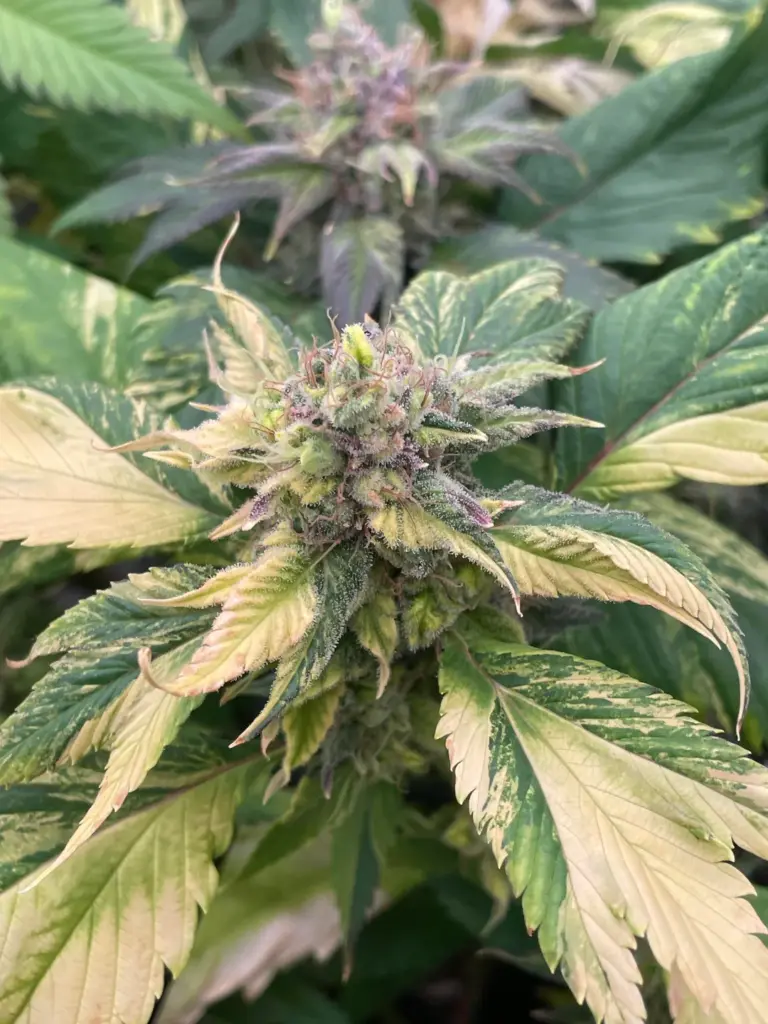
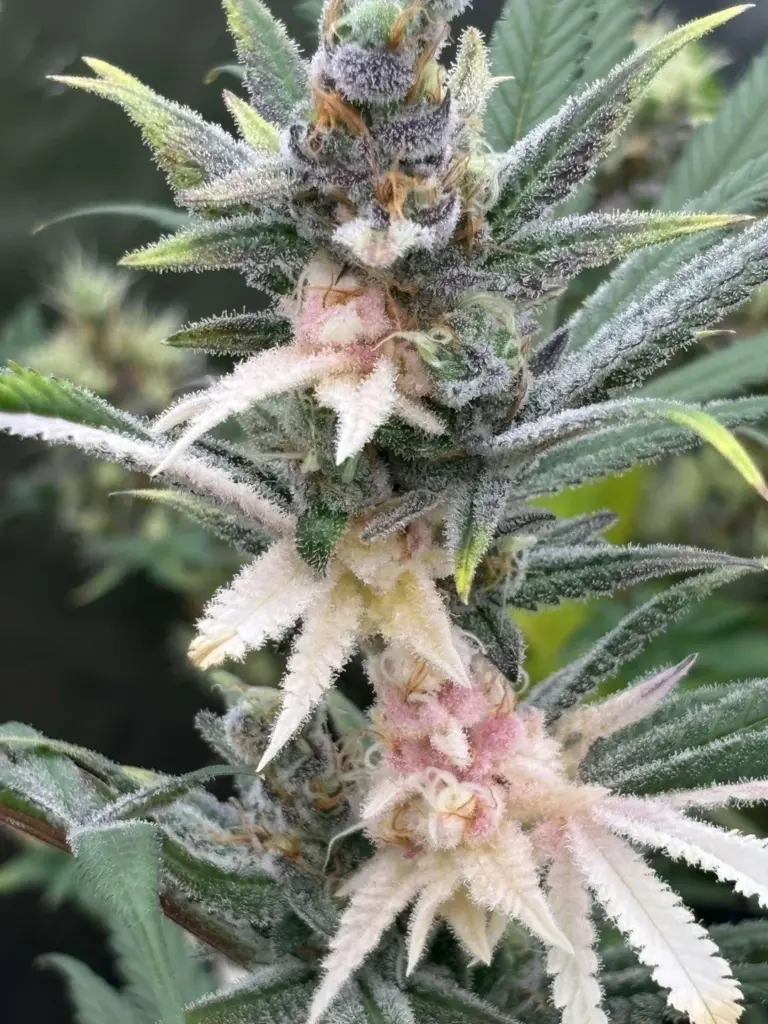
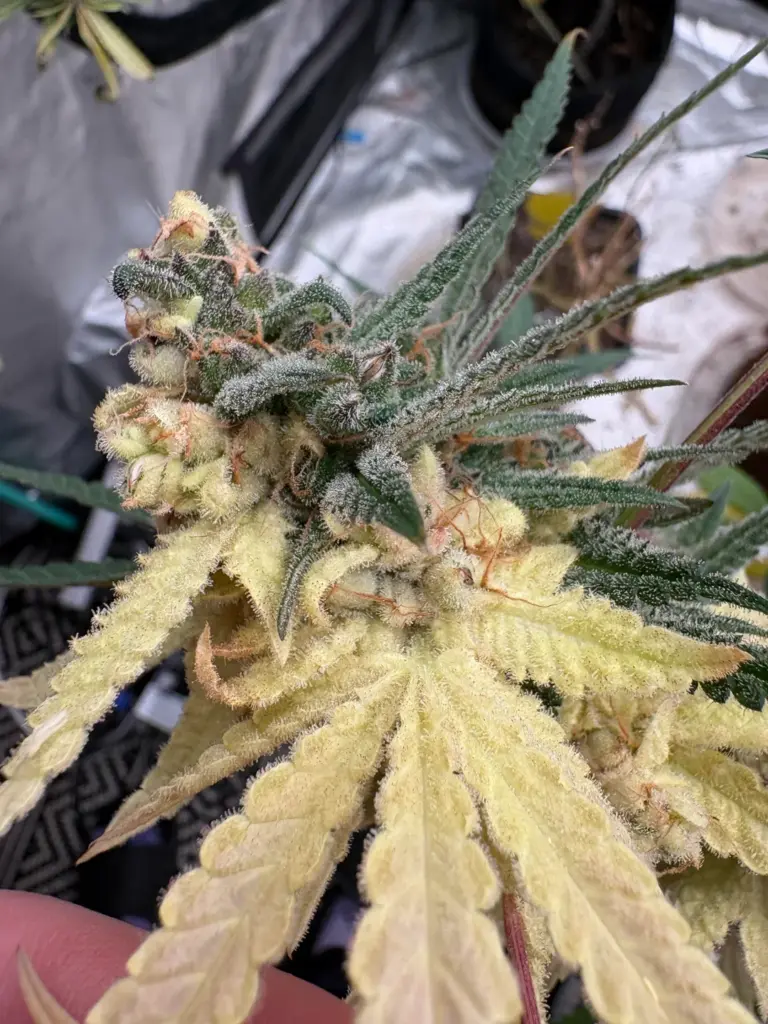
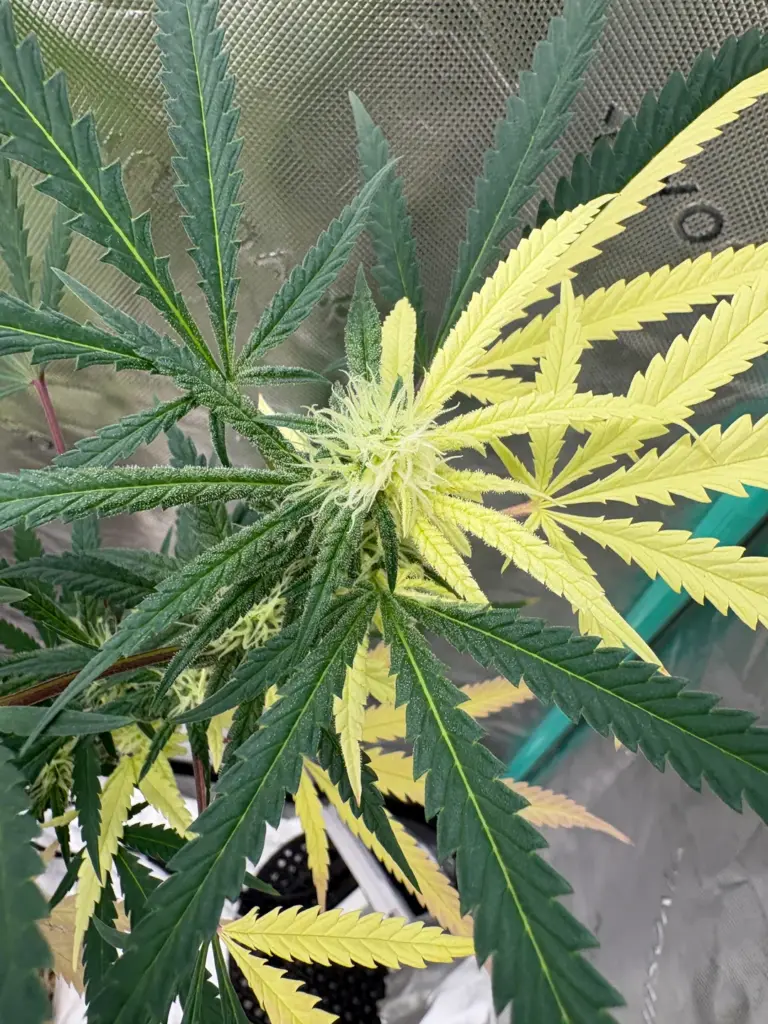
Every so often, a cannabis plant appears that seems almost impossible. A leaf split perfectly down the middle with one half emerald green, the other pure white. A cola spiralling upward with streaks of cream, lime, and forest green like a candy cane. In the rarest cases, entire leaves or flower emerge completely white.
These plants are known as variegated cannabis, and they are among the rarest natural traits in cannabis cultivation.
While variegated houseplants have become highly sought after by collectors, variegation in cannabis remains uncommon and often short-lived. Many heavily variegated plants struggle to survive, and some never make it through a full flowering cycle.
So what causes cannabis to lose its green colour? The explanation begins with one of the most important molecules in the plant kingdom: chlorophyll.
What Is Variegation?
Unlike purple cannabis, which gets its colour from pigments such as anthocyanins, variegation is not simply a colour trait. It is the result of a genetic or cellular mutation that affects the plant’s ability to produce chlorophyll.
Chlorophyll is the green pigment responsible for photosynthesis. It allows plants to capture sunlight and convert that energy into the sugars needed for growth, development, and reproduction.
Most cannabis plants produce chlorophyll throughout their leaves and stems, creating the familiar green appearance associated with healthy plant growth. Variegated plants contain tissues where chlorophyll is reduced or completely absent. Because the green pigment is missing, these areas appear white, cream, yellow, or pale green.
In cannabis, variegation can appear as:
White streaks running through leaves
Half-white, half-green fan leaves
Marbled or mottled patterns
White sectors on stems
Occasionally, white sections within flowers
The white portions are not a separate pigment. They are areas where chlorophyll-producing cells are absent or defective. The result is striking. Some leaves develop random splashes of white, while others emerge with perfectly symmetrical patterns.
What Causes Variegation?
Most cases of true variegation originate from mutations affecting chloroplast development. Chloroplasts are specialized structures within plant cells where photosynthesis takes place. They contain chlorophyll and serve as the plant’s solar power stations.
If a mutation prevents chloroplasts from developing properly, those cells lose their ability to produce chlorophyll. As the plant grows, normal cells and mutated cells continue dividing side by side, creating distinct green and white regions throughout the plant.
In many cases, botanists describe these plants as chimeras. A chimera contains multiple genetically distinct cell populations within the same organism. Different parts of the plant are effectively operating under different genetic instructions.
Because these cell populations expand independently as the plant grows, the resulting patterns can be highly unpredictable. One branch may remain entirely green while another develops dramatic striping. No two leaves may look exactly alike. This unpredictability is one of the reasons variegated plants are so fascinating.
Most Variegated Cannabis Plants Struggle
The white portions of a variegated plant may be beautiful, but they come at a cost. Unlike green tissue, white tissue contributes little or nothing to photosynthesis. It consumes energy without producing much of it. A useful analogy is a solar panel array where half the panels are no longer functioning. The system can still operate, but overall efficiency drops significantly.
The green portions of a variegated cannabis plant must support the white portions. As a result, heavily variegated plants often display:
Slower growth
Reduced vigour
Smaller root systems
Lower biomass production
Increased sensitivity to environmental stress
Plants with modest amounts of variegation can often survive because enough green tissue remains to generate the energy needed for growth. As the percentage of white tissue increases, survival becomes more difficult. From an evolutionary perspective, variegation is generally a disadvantage. Plants that produce more chlorophyll are typically better at capturing energy and reproducing.
Completely White Cannabis Plants Rarely Survive
Every so often, photographs surface online showing nearly all-white cannabis seedlings or branches. While visually impressive, these plants are usually living on borrowed time as a completely white plant contains little or no functional chlorophyll. Without photosynthesis, energy reserves are quickly exhausted.
Unless sufficient green tissue exists elsewhere on the plant to support growth, the plant will eventually die. This is why truly albino cannabis plants are extraordinarily rare. Many germinate but fail to progress beyond the seedling stage. Others survive briefly before growth stalls entirely.
For a heavily variegated cannabis plant to reach maturity, enough green tissue must remain to power the entire organism.
Nature’s Spiral
One of the most fascinating aspects of variegation is that it can reveal growth patterns that normally go unnoticed. Cannabis follows a highly organized growth arrangement known as phyllotaxis. As new leaves, branches, and flowers develop, they emerge around the stem in a spiral pattern. This arrangement helps maximize light exposure while reducing self-shading.
Normally, this architecture is hidden because all tissues share the same green colour. Variegation can make these developmental pathways visible.
When a mutation occurs within a particular layer of cells in the growing tip, that cell line continues dividing as the plant expands. The result can be a stripe of white tissue that spirals around the stem, extends through leaf petioles, and continues into new growth. In some rare specimens, white and green bands appear to twist around each other as the plant grows, tracing the plant’s underlying structure like a living map. What initially appears random is often revealing the hidden geometry that exists within every cannabis plant.
Can Cannabis Flowers Become Variegated?
Yes, although flower variegation is significantly rarer than leaf variegation. Cannabis flowers develop from the same growing tissues responsible for leaves and stems. If variegated cell lines remain active during flowering, white sectors can appear within the buds themselves. This may produce:
White sugar leaves
Cream-coloured calyxes
Striped floral tissue
Mixed green and white sections within a flower
Because flowering is already one of the most energy-intensive stages of the plant’s life cycle, extensive variegation can place additional stress on the plant. As a result, many heavily variegated plants never reach the stage where these unusual flowers fully develop.
Why Growers and Consumers Find Variegation So Fascinating
Variegated cannabis plants are not necessarily stronger, more potent, or more productive than their green counterparts. In fact, they are often less vigorous and more difficult to cultivate. However, they provide a glimpse into the incredible complexity of plant genetics and development. They show how a tiny mutation can transform an ordinary cannabis plant into something extraordinary. They reveal hidden growth patterns. And they remind us that even after decades of cultivation and breeding, cannabis plants still have the ability to surprise us.
These botanical unicorns may struggle to survive, but when they do, they offer one of the most remarkable mutations found anywhere in the plant kingdom.
Here are some great examples of variegated cannabis from Reddit User UnStabE:
If you’ve spent any time around growers, breeders, or cannabis trade shows lately, you’ve probably heard the word triploid come up more than once. Unlike some industry buzzwords that appear overnight and disappear just as quickly, triploids represent a genuine advancement in plant breeding that could have a significant impact on how cannabis is cultivated in the future. But what exactly is a triploid cannabis plant, and why are so many people excited about them?
First, a Quick Genetics Lesson
Most cannabis plants are diploid, meaning they have two sets of chromosomes (one inherited from each parent). This is a very normal genetic structure we find in most plants we interact with every day. Triploid plants, on the other hand, have three sets of chromosomes instead of two.
This isn’t genetic modification or laboratory engineering. Triploids occur naturally throughout agriculture and have been used for decades in crops such as seedless watermelons and bananas. Plant breeders create triploids by crossing a diploid plant with a tetraploid plant, which contains four sets of chromosomes. The resulting offspring inherit three chromosome sets and become triploid.
The concept sounds simple (-ish lol), but those extra chromosomes can create some very interesting characteristics.
Why Are Cannabis Growers Interested?
The biggest reason triploids are attracting attention in cannabis is their potential to reduce seed formation.
To understand why this matters, it helps to understand how cannabis reproduces. When pollen reaches a female cannabis flower, the plant redirects energy toward producing seeds. For commercial flower producers, seeds are super undesirable because consumers expect dense, seed-free buds.
Triploid plants have difficulty producing viable reproductive cells because their chromosome sets do not divide evenly during reproduction. As a result, they can be significantly less likely to produce seeds when exposed to pollen.
Notice the wording there: less likely, not impossible.
One of the biggest misconceptions surrounding triploid cannabis is that it is completely sterile. In reality, sterility exists on a spectrum. While triploids can dramatically reduce seed production, they should not be viewed as an absolute guarantee against pollination under all conditions. Still, the potential reduction in seed formation has growers paying attention.
The Problem Triploids Are Trying to Solve
Cannabis cultivation has always faced a unique challenge: pollen travels. A single male plant, a rogue hermaphrodite, or pollen drifting in from a neighbouring field can create headaches for commercial cultivators. Outdoor growers face this risk every season, while greenhouse and indoor operators spend considerable resources preventing accidental pollination.
As the hemp and cannabis industries continue to expand, concerns about pollen contamination have only grown. In regions where multiple cannabis operations exist within close proximity, growers are increasingly interested in genetics that can help reduce the consequences of unwanted pollination.
Triploids offer one potential solution.
If a plant is less capable of producing mature seeds after pollination, growers may experience less quality loss and fewer seeded plants. For large-scale commercial operations, even a modest reduction in seed formation could translate into meaningful economic benefits.
Are Triploids More Potent?
This is where the conversation gets a little more complicated. Some people have assumed that triploid cannabis automatically produces higher cannabinoid levels, larger flowers, or dramatically increased yields. At this stage, the science does not support making broad claims like that.
Triploidy itself does not magically create more THC, more terpenes, or bigger harvests.What it can do is influence how a plant grows.
In other agricultural crops, triploids have sometimes demonstrated increased vigour, larger cell size, and unique growth characteristics. Whether those traits translate consistently across cannabis cultivars is something breeders are still actively exploring.
The reality is that a triploid plant is only as good as the genetics used to create it. A poorly selected triploid won’t outperform an exceptional diploid simply because it has an extra chromosome set.
For now, most of the excitement centres on reproductive characteristics rather than promises of record-breaking potency.
Why Consumers Should Care
At first glance, triploids might seem like a topic only breeders and commercial cultivators need to understand. But consumers could eventually benefit as well! If triploid genetics help growers produce more consistent crops with fewer seeds, that could contribute to improved flower quality and reduced production losses. Greater crop reliability may also help cultivators operate more efficiently, which benefits the broader supply chain.
For consumers who enjoy learning about cannabis genetics, triploids also represent another example of how sophisticated modern breeding has become. The cannabis industry has evolved far beyond simply crossing two popular strains together. Today’s breeders are applying advanced agricultural techniques that have been used successfully in food crops for generations.
Why They’re Becoming a Major Topic Now
Triploids have existed in agricultural science for a long time, but cannabis research has historically lagged behind other crops due to legal restrictions. As legal cannabis markets mature, breeders now have greater opportunities to invest in long-term genetic development. Research programs are expanding, breeding techniques are becoming more sophisticated, and cultivators are looking for ways to improve consistency and efficiency.
Triploids sit at the intersection of all those goals.
They aren’t a miracle solution, and they won’t replace conventional cannabis genetics overnight. Many questions remain about performance across different environments, cultivars, and production systems. What is clear, however, is that triploids represent one of the most interesting areas of cannabis breeding today. Whether they become a niche tool or a major shift in cultivation practices remains to be seen, but they are far more than a passing trend.
For budtenders, understanding triploids is valuable because consumers are going to hear the term more often in the coming years. And when they ask what it means, you’ll know the answer: triploids are cannabis plants with three sets of chromosomes, developed through advanced breeding techniques, and they’re generating excitement because they may help reduce seed production and improve cultivation consistency. In a rapidly evolving industry, this is def a development worth watching.
Understanding cannabis plant anatomy helps explain how a plant grows, produces cannabinoids, and ultimately develops the flowers we know as “buds.” While cannabis may look simple at first glance, it’s a highly structured organism with specialized parts working together from the soil up to the top cola. Here is a clear breakdown of the plant, moving from the roots all the way to the crown.
Roots
Everything begins below the surface. The root system is responsible for anchoring the plant into the soil and absorbing water and nutrients. Healthy roots are essential for healthy growth above ground. Cannabis roots are fibrous, meaning they form a dense network rather than a single taproot.
Key components include:
Primary roots: Provide structure and depth Lateral roots: Spread outward to increase nutrient absorption Root hairs: Tiny extensions that dramatically increase surface area for uptake
The root zone is also home to beneficial microbes and fungi (like mycorrhizae), which form symbiotic relationships with the plant and help improve nutrient availability.
Stem and Vascular System
Rising from the roots, the stem acts as the plant’s central support and transport system. Inside the stem are two critical vascular tissues:
Xylem: Moves water and minerals upward from the roots Phloem: Distributes sugars and energy produced by photosynthesis throughout the plant
The stem also provides structural strength, allowing the plant to grow vertically toward light. As cannabis matures, the stem thickens and becomes more rigid, supporting heavy flowering sites later in the cycle.
Nodes and Internodes
Along the stem, you’ll notice points where leaves and branches emerge. These are called nodes. The spaces between nodes are known as internodes.
Nodes are important because they are where branches, leaves, and eventually flowers develop. Nodes are also where growers can identify plant sex during early flowering stages, as reproductive structures begin to form here.
Internodal spacing can indicate plant health and growth conditions. Tighter spacing often results from strong light exposure, while wider spacing can indicate stretching
Leaves
Leaves are the plant’s energy factories. Cannabis leaves are primarily fan leaves, which are large, multi-pointed leaves designed to capture sunlight efficiently. These leaves play a crucial role in photosynthesis, converting light energy into sugars that fuel growth.
Key parts of the leaf include:
Blade: The broad surface area for light absorption Petiole: The small stem connecting the leaf to the main plant Stomata: Tiny pores that allow gas exchange (CO₂ in, oxygen out)
While fan leaves are often removed during harvesting or trimming, they are essential during the plant’s growth phase.
Branches and Apical Growth
Branches extend from nodes and support additional leaves and flower sites. The way a plant branches depends heavily on genetics and training techniques used by growers.
At the very top of the plant is the apical meristem, also known as the main growth tip. This is where vertical growth is driven and where the largest flower cluster can form if left untrained.
Growers often manipulate apical dominance (through topping or pruning) to encourage more even canopy development and increase yield potential.
Pre-Flowers and Sex Organs
As the plant matures, it begins to show pre-flowers at the nodes. Cannabis is a dioecious plant, meaning it produces male and female reproductive structures on separate plants.
Female plants develop pistils and ultimately flowers Male plants produce pollen sacs
For cultivation focused on flower production, female plants are preferred because they produce the cannabinoid-rich buds.
Flowers: Calyx, Pistils, and Bracts
The flower is where most of the plant’s chemical activity is concentrated.
Calyx The calyx is one of the first structures to form in the flower. It acts as a protective layer around the developing reproductive organs. Over time, it becomes a core structural component of the bud.
Bracts Bracts surround the calyx and are often mistaken as part of the calyx itself. They are highly resinous and contain many of the plant’s cannabinoid-producing glands.
Pistils Pistils are the hair-like structures that emerge from the flower. These are the reproductive organs of the female plant, designed to catch pollen. They often change color over time, from white to orange, red, or brown, as the plant matures.
Trichomes
Trichomes are one of the most important features of the cannabis plant. These tiny, crystal-like glands cover the surface of flowers and sometimes surrounding leaves. They are responsible for producing:
Cannabinoids like THC and CBD Terpenes aroma and flavour compounds Protective resins that defend against pests and environmental stress
Trichomes come in three main types:
Bulbous: Very small and barely visible Capitate-sessile: Slightly larger and more developed Capitate-stalked: The most abundant and resin-rich type found on mature flowers
Cola (Top Flower Cluster)
At the very top of the plant sits the cola, also known as the terminal bud. The cola is not a single flower, but a cluster of tightly packed flowers that form along the main stem and major branches. It is the most visually recognizable part of the cannabis plant and often the most resinous.
In wild cannabis plants, there is typically one dominant cola at the top. However, through cultivation techniques, growers can develop multiple colas across the canopy to maximize yield.
The cola represents the plant’s reproductive peak, where flower density, resin production, and genetic potential come together.
Cannabis plant anatomy is a connected system
The roots feed the stem, the stem supports the leaves, the leaves power growth, and the flowers express the plant’s full genetic and chemical potential. From root hairs absorbing nutrients in the soil to trichomes forming on the final cola, every part plays a role in shaping the plant’s development and final quality before it hits the shelves.
Walk into a cannabis store and you will hear people describe products as “gassy,” “citrusy,” “earthy,” “piney,” or “sweet.” Those aromas are largely created by terpenes: aromatic compounds produced naturally by plants.
In cannabis, terpenes are often discussed in relation to flavour and scent, but their role in the plant goes much deeper than creating enjoyable aromas. Terpenes are part of how cannabis interacts with the world around it. They help the plant respond to stress, communicate with its environment, and protect itself from potential threats.
Understanding where terpenes come from helps explain why different cannabis cultivars smell so distinct, why environmental conditions matter so much during cultivation, and why some infused cannabis products use terpenes sourced from completely different plants.
Terpenes Begin as Plant Survival Tools
Cannabis does not produce terpenes for human enjoyment. It produces them because they serve biological functions that support the plant’s survival.
Many terpenes act as defensive compounds. Certain aromas can repel insects, discourage herbivores, or slow the growth of harmful microbes like bacteria and fungi. Others may help attract beneficial organisms that support pollination or contribute to ecological balance around the plant.
Plants are constantly reacting to their environment, and terpene production is one of the ways they do that. Heat, light intensity, drought, nutrient availability, and physical damage can all influence terpene expression. This is one reason the same cultivar grown in different environments may develop noticeably different aroma profiles.
Where Terpenes Are Produced in Cannabis
In cannabis, terpenes are primarily produced inside the plant’s trichomes.
Trichomes are the tiny resin glands that coat the flowers and nearby leaves. They are responsible for producing not only terpenes, but also cannabinoids like THC and CBD. Under magnification, trichomes resemble small crystal-like structures covering the flower surface.
These glands function almost like miniature chemical factories. Inside them, the plant synthesizes aromatic molecules through a series of metabolic pathways using energy, water, and basic plant nutrients. Genetics determine what a plant is capable of producing, while environmental conditions influence how strongly those traits are expressed.
This is why terpene profiles are never determined by genetics alone. Cultivation practices matter too.
Why Growing Conditions Matter
Terpene development is highly sensitive to environmental conditions throughout cultivation and post-harvest processing.
Factors that may influence terpene expression include:
Temperature
Humidity
Light spectrum and intensity
Soil or growing medium
Nutrient availability
Irrigation practices
Harvest timing
Drying and curing methods
For example, excessive heat during cultivation or drying can cause volatile terpenes to evaporate more quickly. Poor curing conditions may flatten aroma complexity or degrade delicate compounds before the product ever reaches consumers.
This sensitivity is part of why terpene preservation has become such an important focus in cannabis production. Growers and processors are not simply trying to maximize cannabinoid percentages — they are also trying to protect the aromatic compounds that contribute to the overall sensory experience.
Cannabis Terpenes vs Botanical Terpenes
One of the most misunderstood aspects of terpenes is that they do not exclusively come from cannabis.
Terpenes exist throughout nature. Citrus fruits, pine trees, lavender, hops, rosemary, mangoes, and countless other plants produce many of the same aromatic compounds found in cannabis.
For example:
Limonene is commonly associated with citrus aromas Pinene is abundant in pine needles and rosemary Linalool is found in lavender Myrcene appears in hops, mangoes, and cannabis
Chemically, a terpene molecule is the same regardless of where it comes from. A limonene molecule isolated from an orange peel is structurally identical to limonene isolated from cannabis.
Because of this, many cannabis products, especially vapes, edibles, and beverages, use botanical terpenes sourced from non-cannabis plants. These sources are often easier to scale, less expensive, and more widely available than cannabis-derived terpene extraction.
Cannabis-derived terpenes are still valued for their ability to more closely reflect the original aroma profile of a specific cultivar, but both sources are widely used across the industry.
How Terpenes Are Extracted
Once terpene-rich plant material is collected, manufacturers use extraction methods to isolate and preserve those aromatic compounds.
Some of the most common methods include:
Steam Distillation Steam distillation uses heated steam to separate volatile aromatic compounds from plant material. As the steam moves through the plant, it carries terpenes with it. The vapour is then cooled and condensed, allowing the terpene-rich oils to be collected.
This method is widely used for essential oils and botanical terpene production.
Solvent Extraction Certain solvents, such as ethanol, can dissolve terpenes from plant material. After extraction, the solvent is removed, leaving behind concentrated aromatic compounds.
This method can capture a broad range of compounds but requires careful processing to ensure purity and solvent removal.
Supercritical CO2 Extraction Supercritical CO2 extraction uses carbon dioxide under carefully controlled temperature and pressure conditions. In this state, CO2 behaves partly like a gas and partly like a liquid, allowing it to efficiently pull terpenes from plant material.
This method is popular because it allows precise control over extraction conditions while minimizing unwanted residues.
How Scientists Analyze Terpenes
Cannabis laboratories commonly use gas chromatography (GC) to analyze terpene content. Gas chromatography separates the individual compounds within a sample and measures their concentrations. This allows producers and researchers to identify which terpenes are present and in what amounts.
Terpene analysis helps with:
Product consistency
Quality assurance
Cultivar characterization
Consumer labelling
Research and development
Without analytical testing, it would be difficult to accurately compare terpene profiles across products or reliably communicate aroma composition to consumers.
More Than Just Aroma
Terpenes are often marketed primarily as flavour compounds, but in the plant itself they are part of a much larger biological system. They help cannabis respond to stress, interact with its environment, and protect itself throughout its lifecycle.
For consumers, terpenes contribute significantly to the sensory identity of cannabis products. For cultivators and processors, they represent delicate compounds that require careful handling from cultivation through packaging.
And for the industry as a whole, understanding where terpenes come from helps bridge the gap between plant science, cultivation practices, product formulation, and the overall cannabis experience.
Walk into almost any cannabis conversation and you’ll hear words like indica, sativa, hybrid, terpenes, and cultivars. But underneath all the branding and strain names is something much older and far more fascinating: botany.
Botany is the scientific study of plants: how they grow, reproduce, evolve, and relate to one another. And cannabis? It has a surprising place in the plant kingdom.
Understanding cannabis botany helps explain why certain plants smell similar, why some cultivars grow differently than others, and why scientists still debate how cannabis should even be classified today. Botany is the root of cannabis science.
What Is Botany?
Botany is essentially plant science.
It studies everything from plant anatomy and genetics to ecology, reproduction, chemistry, and classification. Botanists organize plants into groups based on shared characteristics and evolutionary relationships, creating a system that helps scientists communicate clearly about millions of species around the world.
Without botany, every region would use different names for the same plants, making research and medicine incredibly confusing! Cannabis is just one member of an enormous global family tree.
The Five Kingdoms of All living Things
All living organisms are grouped into five broad biological kingdoms.
Monera — bacteria and single-celled organisms without a nucleus Protista — organisms like algae and plankton Fungi — mushrooms, yeasts, and molds Animalia — animals Plantae — all plants
Cannabis belongs to the Plantae Kingdom, alongside trees, mosses, flowers, grasses, and ferns. From there, things get more specific.
Cannabis Is a Flowering Plant
Cannabis is classified as an angiosperm, which means it is a flowering plant that produces seeds. Angiosperms make up the majority of plants on Earth. Everything from apples and roses to tomatoes and sunflowers falls into this category.
One defining feature of angiosperms is reproduction through flowers. In cannabis, these flowers are especially important because they contain the trichomes that produce cannabinoids and terpenes. That means the very compounds consumers care most about are directly tied to cannabis biology and reproductive structures.
Plant Families: Cannabis Has Relatives
Plants are further grouped into families based on shared genetic and structural traits.
First thing to note is that family names almost always end in “aceae.” For example:
Rosaceae — the rose family Lamiaceae — the mint family Apiaceae — the carrot family
Cannabis belongs to the Cannabaceae family, sometimes called the hemp family. And this is where things get interesting! The Cannabaceae family also includes hops (Humulus), the plant used in brewing beer.
That’s why cannabis and hops are often compared. They’re botanical cousins. Both produce aromatic compounds called terpenes, and both share certain growth and reproductive characteristics. If you’ve ever smelled a particularly “hoppy” IPA and noticed similarities to cannabis aroma, that’s not your imagination. It’s genetics!
Why Scientific Names Matter
Common plant names can get chaotic. One plant might have dozens of regional nicknames, while entirely different plants can share the same common name. Scientific naming solves this problem.
Every plant receives a universal Latin name using a system called binomial nomenclature, developed by Swedish botanist Carl Linnaeus.
Each scientific name has two parts:
Genus — the broader group Species — the specific identifier
For cannabis, the scientific name is: Cannabis sativa
The genus is Cannabis. The species is sativa.
Together, they create a unique scientific identity recognized worldwide.
What Does “Sativa” Actually Mean?
In modern cannabis culture, “sativa” usually refers to a style of effects or plant structure. But botanically, the word has a different meaning.
In Latin, sativa means “cultivated.”
The term appears in many unrelated agricultural plants, including:
So scientifically speaking, “sativa” was never originally intended to describe uplifting effects or narrow leaf shapes. It simply indicated that the plant was cultivated by humans. That’s one reason modern cannabis terminology can sometimes clash with formal botany.
What Does the “L.” Mean?
Sometimes you’ll see cannabis written as: Cannabis sativa L.
That final “L.” stands for Linnaeus! It credits Carl Linnaeus as the scientist who first formally named the species.
This practice exists throughout botany. Abbreviations after plant names recognize the original botanist responsible for classification. It’s a small detail, but one deeply connected to the history of scientific taxonomy.
The Debate Around Cannabis Species
Here’s where cannabis botany becomes controversial. Some botanists argue cannabis contains multiple distinct species:
Others believe they are all variations or subspecies of a single species: Cannabis sativa. Even today, scientists still debate where those lines should be drawn.
Modern hybridization complicates things further. After decades of crossbreeding, many commercial cannabis cultivars contain genetics from multiple lineages, making clean classification difficult. In other words: the cannabis plant humans grow today is very different from the wild populations early botanists studied centuries ago.
Hybridization and the Modern Cannabis Plant
Botanical names sometimes include an “x” to indicate hybrids between species. Hybridization happens naturally in plants, but humans have accelerated the process dramatically in cannabis cultivation.
Breeders combine plants to emphasize traits like:
cannabinoid production
terpene profiles
flowering time
disease resistance
colouration
yield
This is why modern cannabis often resists simple labels! A cultivar marketed as an “indica” may genetically contain significant sativa ancestry, and vice versa. Botany reminds us that cannabis is not static. It’s an evolving agricultural crop shaped heavily by human selection.
Why Cannabis Botany Matters
At first glance, botanical classification might seem overly scientific or disconnected from everyday cannabis experiences. But it actually explains a lot.
Botany helps us understand:
Why certain plants share aromas How cannabis reproduces Why cultivars express different growth patterns How genetics influence cannabinoids and terpenes Why cannabis naming systems can be inconsistent
It also helps separate scientific reality from marketing simplifications.
The more the cannabis industry matures, the more important plant science becomes, especially for cultivation, breeding, education, and product development. Because beneath every strain name, terpene chart, and THC percentage is still the same thing: A plant with a long evolutionary history and a delightfully complicated family tree.
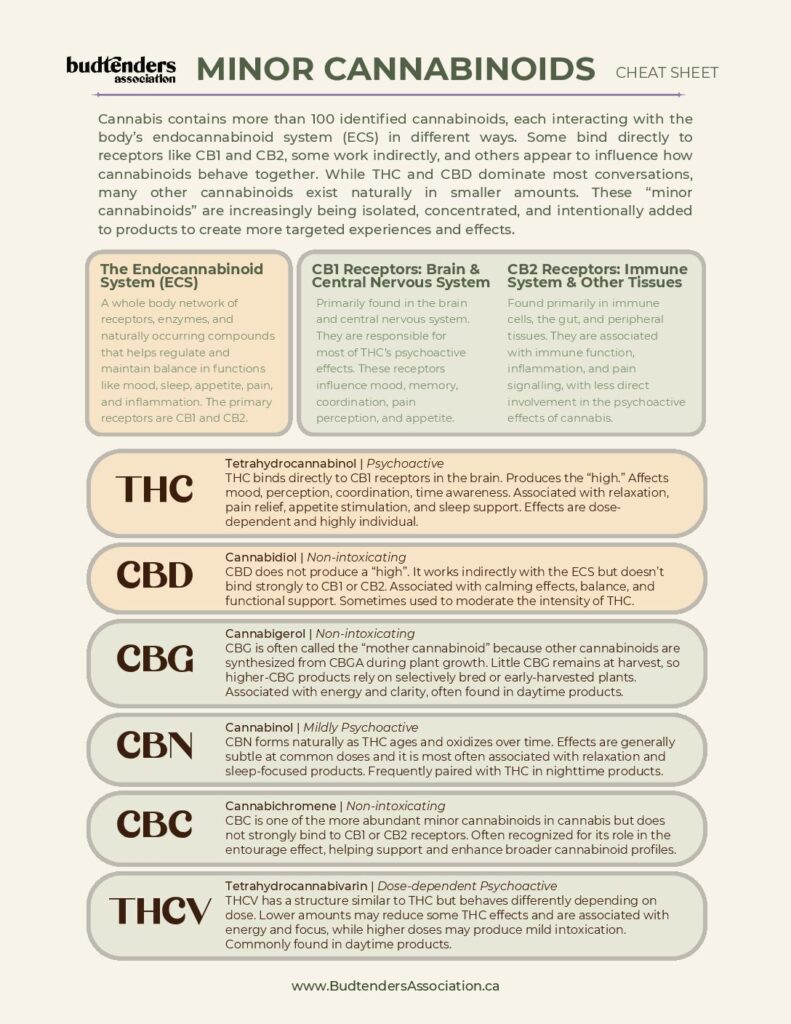
Products on shelves today contain more than just THC and CBD. Here’s what those other letters mean, how they differ, and how different combinations can shape an experience.
How the Endocannabinoid System Works
Before any cannabinoid makes sense, it helps to understand what it’s interacting with. The endocannabinoid system (ECS) is a network of receptors, enzymes, and naturally-occurring compounds spread throughout the brain and body. It plays a role in regulating things like mood, sleep, appetite, pain perception, and inflammation — essentially helping the body maintain balance.
The two main receptor types are CB1 and CB2. Cannabinoids from the cannabis plant, called phytocannabinoids, interact with these receptors by mimicking compounds the body already produces naturally.
CB1 Receptors: Brain & Central Nervous System Concentrated in the brain and spinal cord. Primarily responsible for the psychoactive effects of THC. Influence mood, memory, coordination, pain perception, and appetite.
CB2 Receptors: Immune System & Peripheral Tissues Found mostly in immune cells, the gut, and peripheral organs. Linked to inflammatory responses and immune regulation. Less directly tied to the “high.”
Cannabis contains more than 100 identified cannabinoids. Each one interacts with the ECS differently. Some bind directly to receptors, some work indirectly, and some appear to modulate how other cannabinoids behave. That’s exactly why two products with the same THC percentage can feel very different from one another.
THC & CBD: A Quick Refresher
These two are well known, but understanding them sets the context for everything else.
THC | Tetrahydrocannabinol Psychoactive
Binds directly to CB1 receptors in the brain
Produces the “high” — affects mood, perception, coordination, time awareness
Associated with relaxation, pain relief, appetite stimulation, and sleep support
Effects are dose-dependent and highly individual
THC-A is the raw, unheated form. It’s non-psychoactive until it’s decarboxylated (heated), converting to THC through smoking, vaping, or cooking.
CBD | Cannabidiol Non-intoxicating
Does not produce a “high”
Works indirectly with the ECS — doesn’t bind strongly to CB1 or CB2
Associated with calming effects, balance, and functional support
Often used to moderate the intensity of THC
CBD-A is CBD’s raw precursor, found in unheated cannabis. It converts to CBD when heat is applied.
The Five Key Minor Cannabinoids
Minor cannabinoids are present in smaller quantities in the cannabis plant, but they’re increasingly being concentrated and added to products intentionally. Understanding each one helps explain why products are formulated the way they are and helps customers make better choices.
CBG | Cannabigerol “The Starting Point”
CBG is often called the “mother cannabinoid” because other cannabinoids, including THC and CBD, are actually synthesized from its acidic precursor, CBGA, during the plant’s growth cycle. By the time most cannabis is harvested, very little CBG remains naturally, which is why higher-CBG products use selectively bred or early-harvested plant material.
CBG is non-intoxicating. It interacts weakly with CB1 and CB2 receptors but has more pronounced effects on other receptor systems. Users and researchers commonly associate CBG with a clear, focused, functional quality. It’s understood to be less sedating than CBD and notably different in character.
Remember it: G is for Go — CBG is associated with energy and clarity, often found in daytime products.
CBN | Cannabinol “The Night Shift”
CBN forms naturally as THC ages and breaks down over time through oxidation. It’s sometimes mildly psychoactive at higher concentrations, though at typical product dosages its effects are very subtle. CBN tends to prefer CB2 receptors and is most commonly found in nighttime and relaxation-focused products.
The “sleepy cannabinoid” reputation is well-established in cannabis culture, though research is still emerging. What’s notable is that CBN appears to work especially well in combination with THC. The two together tend to produce a heavier, more sedative quality than either alone. Many sleep-focused products deliberately combine them.
Remember it: N is for Night — CBN is the one that shows up in sleep and wind-down products.
CBC | Cannabichromene “The Team Player”
CBC is one of the most abundant minor cannabinoids in the plant and is non-psychoactive. It’s not well known by consumers yet, but it plays a particularly interesting role in how cannabinoids work together. CBC doesn’t bind strongly to CB1 or CB2 receptors at all. Instead it appears to interact with other receptor systems in the body related to inflammation and discomfort.
What makes CBC stand out is its role in the entourage effect. It’s considered a strong synergistic partner with THC, CBD, and other cannabinoids, meaning it may help amplify or round out the effects of the broader cannabinoid profile in a product.
Remember it: C is for Crew — CBC rarely works alone, it’s a team player that amplifies what’s around it.
THCV | Tetrahydrocannabivarin “The Spark”
THCV has a structure similar to THC but behaves differently depending on the dose. At lower amounts, it appears to act as a CB1 antagonist. This means it can actually dampen some of THC’s psychoactive effects rather than amplify them, while contributing an energizing, stimulating quality. At higher doses, it may produce its own mild intoxication.
THCV is naturally found in higher concentrations in certain African sativa landrace strains. It’s increasingly added to uplifting, daytime, and focus-oriented products. Some product descriptions associate it with a “clear-headed” energy — not sedating, not anxious-feeling.
Remember it: V is for Vivid and alert — THCV is the energising one, commonly in daytime and creative products.
CBDV | Cannabidivarin “The Emerging One”
CBDV is structurally similar to CBD, like a slightly smaller version of the same molecule. It’s non-intoxicating and shares some receptor interactions with CBD, including effects on TRP channels (which are involved in how the body senses things like heat and inflammation). CBDV is more potent at CB2 receptors than at CB1.
Of all the minor cannabinoids, CBDV has the fewest products built around it yet, but it’s the one researchers are watching closely. It’s naturally more abundant in certain indica varieties from Asia and Africa. As research advances, CBDV products are expected to become more common on shelves.
Remember it: V for Version — CBDV is essentially CBD’s little cousin, still emerging but gaining attention fast.
Quick Ways to Remember Each One
You’ll be asked about these on the floor. Here are the one-word anchors.
CBG → Go / Green Daytime, functional, clear-headed. G = Go.
CBN → Night Born from aged THC. The wind-down cannabinoid. N = Night.
CBC → Crew Non-psychoactive. Amplifies others. C = Crew player.
CBDV → Version CBD’s smaller molecule cousin. Still emerging. V = Version 2.0.
How Different Cannabinoid Ratios Work
One of the biggest shifts in the cannabis market is the move toward intentional cannabinoid blends. Rather than optimising for the highest THC percentage, formulators are now combining cannabinoids in specific ratios to create more predictable, targeted experiences. Reading a ratio is a skill on its own.
How to read a ratio label:
THC : CBD : CBN — 2 : 1 : 1
→ The order matters. Cannabinoids are listed highest to lowest → The numbers show relative proportion, not milligrams → 2:1:1 means twice as much THC as each other cannabinoid → Check the total mg per serving for actual dose
Two-cannabinoid ratios (like THC:CBD) have been around for years. But the industry is now seeing a surge in tri-blend and multi-cannabinoid formulas. These combinations try to recreate some of the complexity of a whole-plant experience in a controlled, consistent product.
The most established ratio in the market. CBD at equal parts can soften the intensity of THC, making for a smoother, more moderate experience. Often a good starting point for newer consumers who want some THC effect without going fully THC-forward.
CBN alongside THC creates a notably heavier, more sedative quality than THC alone. The THC provides the primary effect and CBN adds what users often describe as a “weighted” relaxation. Very common in nighttime edibles and sleep-focused products. The 2:1 leans THC-forward; some products go 1:1 for a more even effect.
1:1 — THC : CBG Daytime Focus | Creative
CBG’s clear, functional character pairs with THC for a more alert, less foggy experience. Often described as a “creative” or “productive” combination, the THC opens things up mentally while the CBG helps maintain a thread of focus. Popular in daytime vapes and microdose products.
4:1:1 — THC:CBG:THCV Daytime Energizing | Active | Alert
A newer tri-blend gaining popularity in daytime vapes. THCV contributes an energizing, stimulating quality and may actually moderate some of THC’s heavier effects. CBG adds clarity. Together with THC, this combination is often described as the cannabis equivalent of a strong coffee — uplifting without the heaviness.
1:1:1 — THC:CBD:CBN Evening Complex | Balanced
Adding a third cannabinoid creates what formulators describe as a “rounder,” more complete experience. In this blend: THC provides the primary effect, CBD softens and balances, CBN adds the settling, relaxing weight. More complex than a two-cannabinoid product and less likely to feel one-dimensional. Great for consumers who’ve found straight THC too intense.
CBD-dominant blends with supporting cannabinoids are increasingly common in wellness-positioned products. The high CBD base keeps intoxication low; CBG adds a functional clarity; CBN provides a gentle settling quality. This kind of profile is well-suited to consumers who want to feel the cannabis but not be heavily impaired.
Note: Ratios describe proportion, not intensity. A 1:1 THC:CBN product at 5mg total will feel very different from the same ratio at 20mg. Always consider the total dosage alongside the ratio.
The Entourage Effect: Why the Whole Is Greater Than the Sum of Its Parts
The term “entourage effect” was first introduced in 1998 to describe how multiple cannabis compounds working together can produce stronger or more nuanced effects than any single compound in isolation. It’s one of the key reasons full-spectrum products are often described as feeling richer or more complex than isolate-based products.
THC + CBD + CBG + CBN + CBC + Terps All compounds interact. No single one works in isolation
Cannabinoids don’t just add up independently, they interact with each other and with terpenes (the aromatic compounds responsible for scent and flavour). Certain combinations appear to modify, enhance, or moderate each other’s effects. This is part of why two cannabis products with identical THC percentages can deliver completely different experiences.
Full-Spectrum vs. Broad-Spectrum vs. Isolate
Understanding this distinction is useful when a customer asks why one product feels different from another with the same THC content.
Full-Spectrum Contains THC, CBD, minor cannabinoids, terpenes, and other plant compounds. Maximum opportunity for entourage effect. Most complex experience.
Broad-Spectrum Multiple cannabinoids and terpenes, but THC removed or reduced below detection. Retains some entourage benefit without the THC component.
Isolate A single cannabinoid extracted and purified. Predictable and consistent but lacks the complexity of multi-compound products. No entourage effect.
Terpenes also play a role. Compounds like myrcene (associated with earthy, relaxing qualities), limonene (citrusy, uplifting), and caryophyllene (peppery, grounding) don’t just create aroma. There’s exploratory evidence that they may interact with cannabinoid receptors and influence the overall character of an experience. The science is still developing, but it helps explain why two products with identical cannabinoid profiles can still smell and feel different.
Helping Customers Navigate Minor Cannabinoids
Most customers won’t come in asking for THCV by name. But they will describe what they’re looking for, and knowing the cannabinoid profiles lets you steer them toward the right product. Here are the most common conversations and how to frame them.
“I need help sleeping / winding down” Look for products with CBN alongside THC. A 2:1 THC:CBN or a tri-blend with CBN included is a good place to start. The CBN adds a heavier, more settling quality to the THC effect.
“I want something for daytime / I don’t want to feel foggy” CBG-forward products or THC:CBG blends lean functional and clear. If they want energy, THCV-containing products are worth mentioning. Full-spectrum over isolate for a more rounded experience.
“Same THC % as last time but it hits totally differently” This is the entourage effect in action. Different terpene profiles, different minor cannabinoid content, same THC number, completely different experience. This is a great moment to explain why total cannabinoid profile matters more than any single number.
“What do these numbers on the label mean?” Walk them through the ratio: the order lists cannabinoids highest to lowest proportion. Check the milligrams per serving for actual dose. A product with a 1:1:1 blend at 5mg each per serving is a light product; the same ratio at 15mg each is significantly stronger.
“What’s full-spectrum mean? Is it better?” Not necessarily better for everyone, but it does offer more complexity due to the entourage effect. For consumers who want a predictable, consistent single-note experience, isolate or broad-spectrum products may actually suit them better.
“I want something creative / social / uplifting” THC:CBG blends, THCV-containing products, or sativa-dominant terpene profiles. THCV in particular is often described as producing an alert, engaged quality without the heaviness that can sometimes accompany higher-THC products.
A note on language: Cannabis education is evolving, and so is the regulatory landscape. When discussing cannabinoids with customers, focus on the experiential and functional aspects of products rather than framing effects as treatments or remedies for specific conditions. The information in this guide is intended to help understand how cannabinoids work and how products are formulated — not to make medical claims.
This is for budtender training and general consumer education. Information is based on current research and industry understanding as of 2025–2026. Cannabis science is an evolving field. New research continues to develop our understanding of how cannabinoids interact with the body. This guide does not constitute medical advice and is not intended to diagnose, treat, or prevent any condition.